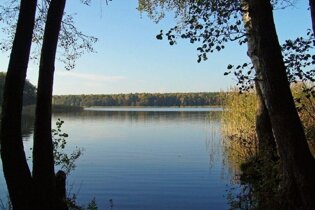
Ditch the clothes and head for a charming naturist campsite tucked away in the picturesque German countryside
Camping in Germany
4 campsites in Germany for Saxony-Anhalt
Campsite Listing Google Map
The following consent is required:
Tracking & performance, Targeting & advertising.
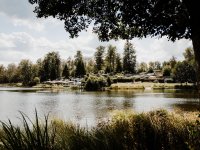
Adjacent to the four-hectare Bremer Teich Lake in Saxony-Anhalt and with views of the Harz mountains, this idyllic site has been extensively upgraded in recent years. There are 140 level touring pitches (80 sq.m), the majority with 16A electricity and 20 fully serviced. The main attraction is the lake, whose shallow banks make it suitable for paddling, and a lifeguard is present in high season.
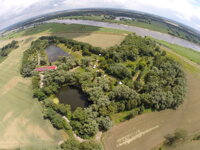
Family Camp Kellerwiehl is located in Saxony-Anhalt, in the heart of the Altmark. The site is between the Elbe and the Elbe cycle path. The 1000-year-old imperial city of Tangermünde it is about 16 km, which can be reached by bike through the small Elbe villages or directly on the dike so it is worth bringing your bike. Furthermore, there are some sights, such as monasteries, churches, the park with waterfall in Tangerhütte and much more.
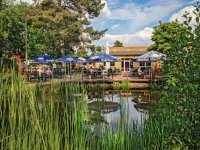
Ferienpark Plötzky is in the east of Germany in the federal state of Saxony-Anhalt. A family site in the countryside with many amenities for both young and old. On site is a recreational lake and there are no fewer than 24 lakes nearby ideal for swimming and sailing. The spacious site has many trees and grassy fields. Sporting outdoor types will be right at home here as the region is perfectly suited to cycling tours and hiking. Fishing is permitted at the lakes. The site has a private sandy beach and a natural swimming pool. In the Grüner Waldsee you can go diving, fishing or swimming. At the lakes in the nearby village of Pretzien you can hire canoes and kayaks. In the surrounding woodland and lakes, you may well see red squirrels, hedgehogs and green woodpeckers. It’s a short cycle ride into Gommern for shops, including Lidl. The Elbe Cycle Route is also accessible from the site. The site has 380 pitches of which 170 grass ones are for touring units with 16-amp hook-up point. There are also 23 caravans, mobile homes, and bungalows available to hire.
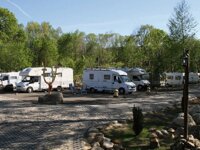
KlosterCamping is the perfect nature lovers' site, covering a total area of approx. 25,000 m2. Between the wildly romantic Bode and the Wendhusenkloster complex, it is surrounded by an old tree population, in the old town area of the mythical city of Thale. The 100 pitches here all have a power connection (220 volts) and are between 70 to 100 m2 in size. There are several taps for drinking water and a facility for sewage disposal. The ground consists of grass or a gravel lawn. There are also hiking huts for rental.

No campsites match your search terms.
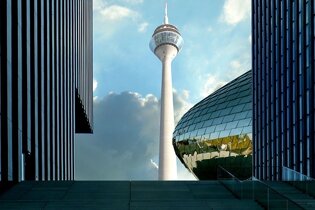
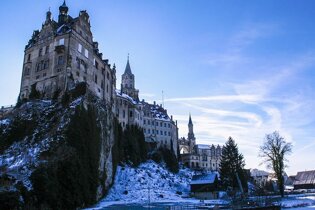
Germany
With its wealth of scenic and cultural interests, Germany is a land of contrasts. From the flat lands of the north to the mountains in the south, with forests in the east and west, regional characteristics are a strong feature of German life, and present a rich variety of folklore and customs.
Each region in Germany has its own unique identity. Home of lederhosen, beer and sausages is Bavaria in the south, with small towns, medieval castles and Baroque churches. In the southwest, Baden Württemberg is famous for its ancient Black Forest and its spas, and boasts the most hours of sunshine. Further west is the stunningly beautiful Rhine Valley, where the river winds through steep hills dotted with castles, ruins and vineyards. Eastern Germany is studded with lakes and rivers, and undulating lowlands that give way to mountains. The north has busy cities such as Bremen and Hamburg as well as traditional North Sea family resorts.
The capital city of Berlin, situated in the northeast of the country, and once divided by the Berlin Wall, is an increasingly popular tourist destination, with its blend of old and modern architecture, zoos and aquariums, museums, green spaces and lively nightlife.
With its wealth of scenic and cultural interests, Germany is a land of contrasts. From the flatlands of the north to the mountains in the south, with forests in the east and west, regional characteristics are a strong feature of German life and present a rich variety of folklore and custom. It really is the sort of place where it’s best to leave the main road from time to time and take a little detour, or just follow an interesting-looking minor road and immerse yourself in the unexpected. The country can be loosely divided into large regions, each with its own identity.
SOUTHERN GERMANY
Southern Germany
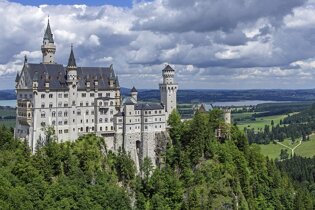
Comprising most of southern Germany, and 20% of the country, Bavaria is the largest state. Home of lederhosen, beer and sausages, Bavaria is known for its small towns, Baroque churches and medieval castles. Perhaps the most iconic is the 19th century fairy tale Schloss Neuschwanstein, improbably perched on a craggy hilltop and looming above the dense surrounding forest. It’s a beautiful region running up to the Alps bordering Austria and Switzerland.
Munich, the capital of Bavaria, is home to ancient buildings, museums and the famous Oktoberfest. Beer aside, Bavaria is also home to big name German car manufacturers: Mercedes (Stuttgart), Porsche (Stuttgart), BMW (Munich) and Audi (Ingolstadt) are all made here.
SOUTHWEST GERMANY
Southwest Germany
Baden Württemberg is famous for traditional production of cuckoo clocks but also its unique and beguiling landscape. With its ancient Black Forest, elegant spa towns and picturesque villages it has long been a popular destinations for British visitors – it also boasts more hours of sunshine than any other German region.
The dense, evergreen Black Forest is a spectacular area with its rivers, forested mountains and long association with the Brothers Grimm fairy tales. It’s a great place for outdoor activities such as hiking, cycling and watersports, not to mention the thermal baths of the spa town of Baden-Baden and several others.
WESTERN GERMANY
Western Germany
Once known as the Bonn Republic, West Germany was the western part of Germany that remained in the western bloc during the Cold War until 1990 reunification and the tearing down of the Berlin Wall.
The west region is dominated by the stunningly beautiful Rhine Valley, where the river winds its way past Cologne and Düsseldorf through steep hills dotted with castles, ruins and vineyards. The heavy industry that remains has not hidden the magnificent old historic centres of towns like Aaachen, Monschau and Bonn.
EASTERN GERMANY
Eastern Germany
Once the cold and foreboding East Germany was austere and isolated, in the shadow of the Soviets. Today it is an appealing region of spectacular scenery studded with lakes and rivers and undulating lowlands that give way to mountains. Cities like Dresden and Leipzig are complemented by smaller quaint towns and coastal destinations such as Wismar, Bad Doberan and Heilingendamm.
The capital city of Berlin, once divided by the Berlin Wall, is an increasingly popular tourist destination, with its blend of old and modern architecture, zoos and aquariums, museums, green spaces and lively nightlife. Not far away lie the gardens and palaces of Potsdam and historic Brandenburg.
The Spreewald forest and Harz mountains, with wooded slopes and lush valleys, are famous for their myths and legends, part of the Saxony heritage. Colditz is a name that conjures all kinds of bleak images but the countryside is attractive and verdant, dotted with lovely towns like Zwickau and Rochlitz.
NORTHERN GERMANY
Northern Germany
To the far north Germany borders Denmark and the lovely coastline here has a number of traditional North Sea family resorts. There are some beautiful islands like Sylt and Rügen just off the coast, windswept and with white sand beaches, soft dunes and billowing grasses and jaunty lighthouses.
The Baltic Coast is sprinkled with heritage destinations like Wismar, Lübeck and Stralsund where the ancient towns are distinctive for their black and red brickwork.
And there are busy cities like Bremen, Hanover and of course Hamburg, a colourful, lively city on the water.
CENTRAL GERMANY
Central Germany
This is Germany HQ. Historic cities which still are vital to the powerhouse economy (think Weimar, Frankfurt, Erfurt and Kassel) but which also are home to fascinating museums, gorgeous cathedrals and countless wonderful castles. The Brothers Grimm came from here and Luther kicked off the Protestant Reformation here (in Wittenberg actually).
CAMPING IN GERMANY
Camping in Germany
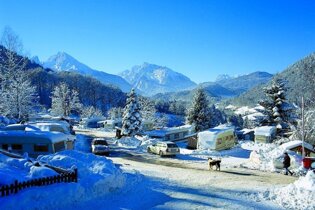
Whether you’re camping with a tent, taking the touring caravan or in a motorhome, a visit to Germany does not restrict you to the summer months. Germany is a popular destination for downhill ski and cross-country skiing enthusiasts and those who are looking for some relaxation can discover the powers of Baden-Baden’s invigorating hot springs. Staying near a city also offers a lot for year round travellers: there’s plenty of architecture, first class shopping, galleries and museums to keep everyone occupied.
GERMAN CUISINE
German Cuisine
Fans of hearty fare will never be disappointed in Germany. German food goes far beyond the easy stereotypes of steins of frothy beer in a biergarten, pretzels, sauerkraut and Black Forest gâteau.
Yes, Wiener Schnitzel, a breaded veal cutlet, is a commonly seen classic, as is Bratwurst and all things potato-based. But there’s more: Hamburg is better known for its fish than its burgers. Southern Germany offers countless superb pork dishes.
Perhaps surprisingly, one of the most ubiquitous dishes is vegetarian: spätzle is a kind of pasta, usually served as an accompaniment, often with cheese. And bread of course is a staple, with endless variations from white wheat, to grey to black bread and pumpernickel.
To drink, pale lager pilsener is traditional and common, also wheat beer. Fabulous, and unique, wines are produced along the Rhine. Grapes like Silvaner and Riesling are prolific, but it’s the Riesling that is the most majestic, creating wines that are revered on the world wine stage.
A far cry from sweetened commercial wines, a good German wine will endure and develop depth and richness. It requires consummate skill to ensure the perfect balance of sweetness and acidity that produces top flight Spätlese, Auslese and even the celebrated Eiswein, made with frozen grapes to ensure maximum concentration of the natural sugars.
Germany at a Glance
Germany at a Glance
Capital: Berlin
Population: 81 million
Climate: Temperate climate. Winters are generally a little colder and summers a little warmer than in the UK.
Language: German.
Telephone: The country code is 00 49.
Currency: The Euro (€).
Banks: Mon-Fri 08.30-12.30 and14.00-16.00. Late opening on Thurs until 18.00.
Shops: Mon-Fri 08.30/09.00 to 18.00/18.30.
Public Holidays:
- 1 January: New Year’s Day (Neujahrstag)
- Good Friday (Karfreitag)
- Easter Monday (Ostermontag)
- 1 May: Labor Day (Maifeiertag)
- Ascension Day (Christi Himmelfahrt, 40 days after Easter)
- Whit Monday (Pfingstmontag) – the seventh Monday after Easter, also called Pentecost Monday
- 3 October: Day of German Unity (Tag der Deutschen Einheit)
- 31 October: Reformation Day (Reformationstag) – generally a regional holiday in Brandenburg, Mecklenburg-Western Pomerania, Saxony, Saxony-Anhalt, and parts of Thuringia.
- 25 December: Christmas Day (Weihnachtstag)
- 26 December: Saint Stephen’s Day (Stephanstag) – also known as the second day of Christmas
- 31 December: New Year’s Eve
Motoring: An excellent network of (toll-free) motorways (autobahns) exists in the West, and the traffic moves fast. Remember, in the East, a lot of road building is going on, amongst other works, so allow plenty of time when travelling and be prepared for poor road surfaces